

Bitcoin Myths, Part 3
No, Bitcoin Is Not Controlled by Corporations or the CIA

A few months ago, I was perusing Substack and came across this comment about Bitcoin:
“They already control it through ETFs and MSTR. The CIA set it up. And it has lost to its own owner. Corporate statism has its hooks in now.”
I decided not to link to the comment itself because I do not want the commenter to get unwanted attention. But I am going to respond to the myths contained in this comment, since each of these claims reveals a different misunderstanding about how Bitcoin works.
The assumption this Substack user put forward is that Bitcoin is controlled by institutions. They argue it was either created and controlled by the CIA or that large corporations have taken over. In their view, it is probably a bit of both. But is it true? Let’s take a look.
Created by the CIA
The biggest problem with arguing against this theory is that no one knows who created Bitcoin in the first place. Who is Satoshi Nakamoto, the creator of Bitcoin? No one knows. 1 Satoshi did an excellent job protecting his privacy and had exceptional internet hygiene. He is like a ghost. So I cannot definitively prove Satoshi is not the CIA. I can only speak in terms of probabilities.
Here is why I find it highly unlikely the CIA created Bitcoin.
Bitcoin is open source, which kills the “secret CIA control” theory. If the CIA wanted a system with hidden backdoors, they would not release the full code to the world. Open-source code means anyone can audit it, and there is nowhere to hide CIA control mechanisms. If these kinds of controls were present, they would have been exposed long ago. This is the biggest reason I do not believe the CIA created Bitcoin.
The early growth does not fit a government-funded launch.
If a major intelligence agency created Bitcoin, adoption would have been seeded through institutions, banks, or global partners. Instead, it grew slowly through cypherpunks, hobbyists, and message boards. A government-backed launch would have flowed through institutions first, but Bitcoin spread among nerds and libertarians long before it ever reached the mainstream.Bitcoin directly threatens U.S. monetary power.
The U.S. government defends the dollar’s global reserve status with extreme intensity. It makes no sense that they would create a competing, uncontrollable currency that weakens their geopolitical leverage.Bitcoin does not strengthen U.S. intelligence capacity in any way.
Intelligence agencies create tools that give them more control, surveillance, or influence. Bitcoin does the opposite. It gives individuals more power, increases financial privacy, and reduces the ability of governments to censor transactions.Satoshi’s behavior does not match a government operation. Satoshi appears to be a one-man operation or at most a very small team. Government agencies like the CIA, NSA, or DARPA do not build world-changing technologies this way. They operate as large bureaucracies with teams of analysts, engineers, budgets, documentation, meetings, oversight, and paper trails. Nothing about Bitcoin’s creation reflects that structure.
There was also no institutional liquidity in Bitcoin’s early days. If a U.S. agency had created Bitcoin, the first miners would not have been hobbyists running CPUs in their basements. Government-backed projects launch through institutions, with seeded liquidity and coordinated adoption, not through cypherpunks on fringe mailing lists. And the CIA would have structured Bitcoin so it could profit early to fund operations, not allow small timers to run the first miners and create the first exchanges.
The U.S. government has historically been hostile to Bitcoin. Early FinCEN crackdowns, banking restrictions, congressional hearings, the reaction to Silk Road, and repeated political attacks all show that Washington viewed Bitcoin as a threat, not a project it secretly created.
Finally, I want to point out that Satoshi had an anti-government stance and was no fan of big business. All you have to do is look at the Genesis block. 2
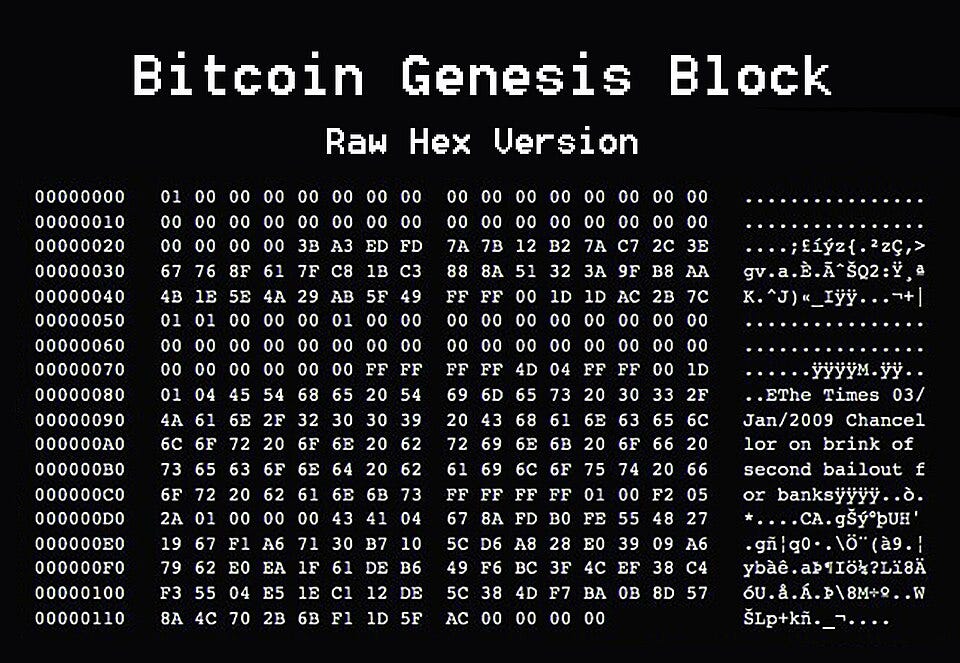
The very first block gives us a glimpse into Satoshi’s thought process: “Chancellor on brink of second bailout.” It is clear that Bitcoin was created as a reaction to the 2008 bailouts. This hardly reflects a government mindset.
I recognize that none of this will ever be enough for a conspiracy theorist. The only thing I can say is to look at the odds. Would the U.S. government choose to create something that undermines its greatest weapon, the U.S. dollar?
Bitcoin is Controlled by the ETFs and Mega Corporations
The next claim is that Bitcoin has been taken over by the ETFs and MicroStrategy (MSTR). But holding large amounts of $BTC is not the same as controlling the network. And I do not think the argument is that they have taken over the network. Instead, the concern is that these large institutions hold so much Bitcoin that they can manipulate Bitcoin’s price.
So how much do they actually hold?
MicroStrategy currently holds 650,000 $BTC. A nice amount but only 3.3% of all Bitcoin in circulation. 3
According to Bold Report the total $BTC holdings of all ETFs worldwide combined is 775,000 $BTC which is 3.9%. 4
Governments only hold about 518,000 $BTC which is about 2.4% of the supply.
Traditional Bitcoin holding companies that have not converted into ETF have about 120,000 $BTC which is 0.6%.
Public companies other than Microstrategy that hold $BTC in their treasuries (like Tesla) is 350,000 $BTC which is 1.78%.
Bitcoin held by private companies is approximately 426,386 $BTC which is 2% of all Bitcoin in circulation.
If we add all of the major corporate $BTC holders together that roughly equals 2,839,386 $BTC or 14.5% of Bitcoin’s total supply. 5
Let’s assume, for the sake of argument, that this same group held 100 percent of all Bitcoin in the exact same proportions they hold today. Even in that unrealistic scenario, the Bitcoin supply would still be distributed widely enough that no single company, government, or entity would have meaningful control. The holdings are spread across multiple jurisdictions, regulated structures, and companies with different business philosophies, incentives, and risk tolerances.
That 14.5 percent is enough to cause price fluctuations if someone sells aggressively, but not enough to manipulate the market in any meaningful or coordinated way. Institutional Bitcoin is spread across many unrelated companies and jurisdictions, and their holdings are publicly visible, so it is easy to see who owns what and when they are buying or selling. The kind of hidden, long-term market manipulation that happened with gold is simply not possible in an open, transparent system like Bitcoin.
Custodial Services
It is well known that Bitcoin miners, exchanges, and certain DeFi projects also hold large amounts of BTC. But these entities act as custodians, not owners, and they are legally and structurally unable to control the Bitcoin they hold. Exchanges like Coinbase allow customers to buy, sell, trade, and store Bitcoin, but they cannot sell users’ Bitcoin against their wishes, and none of the Bitcoin they custody gives them any power over the Bitcoin network itself.
Bitcoin miners also do not function as long-term holders. They typically sell most of the BTC they earn in order to pay for electricity, hardware, and operational costs, which means miner balances constantly flow back onto the market rather than accumulating as concentrated power.
Large DeFi platforms are similar. Many offer services like wrapped Bitcoin, where a user deposits BTC and receives a tokenized version on another blockchain. But this is a technical escrow service, not institutional ownership. The DeFi platform cannot use or sell the Bitcoin it holds because it is locked as collateral for the user’s wrapped tokens.
None of these actors can change Bitcoin’s rules, censor transactions, or control the network. They temporarily hold user Bitcoin, but they do not control Bitcoin in any meaningful sense.
Of course, I still believe that you should hold $BTC in your own non custodial wallet, but the existence of a variety of custodial services does not signal institutional control.
Conclusion
I spilled a lot of ink to dismantle a short Substack comment, but that is the nature of these debates. It is easy to write a lie and much harder to explain the truth. Anyone can claim that the CIA created Bitcoin or that corporations now control it, but owning coins does not give you power over the Bitcoin network. And the fact that a conspiracy theory cannot be disproved does not make it plausible.
The truth is more complex, and far more interesting. People keep trying to imagine a secret master behind the network, yet Satoshi designed Bitcoin so there would never be one. Bitcoin has no ruler, and that is the feature that changed the world.
Final Word
Don’t believe the lies.
“Falsehood flies, and truth comes limping after it, so that when men come to be undeceived, it is too late; the jest is over, and the tale hath had its effect: like a man, who hath thought of a good repartee when the discourse is changed, or the company parted; or like a physician, who hath found out an infallible medicine, after the patient is dead.”
― Jonathan Swift
DISCLAIMER: This article is for informational and educational purposes only and should not be construed as financial, investment, tax, or legal advice. The author is not a licensed financial advisor, and nothing in this article constitutes a recommendation to buy, sell, or hold any cryptocurrency, gold, or other asset. Cryptocurrency investments are highly volatile and risky, and you could lose all of your invested capital. Past performance does not guarantee future results. Always conduct your own research and consult with a qualified financial advisor before making any investment decisions. The author operates a paid cryptocurrency education course and may hold positions in assets discussed.
https://www.britannica.com/biography/Satoshi-Nakamoto
https://en.bitcoin.it/wiki/Genesis_block
https://bitbo.io/treasuries/microstrategy/
https://bold.report/bitcoin/holdings/?chart=holdings
Please recognize that the private company holdings are more estimated and that holding constantly change.
Nice clear arguments.
Another piece of evidence against Satoshi being in the C.I.A. is this:
There was a much simpler way for the C.I.A. to have 'astroturfed' a punk Internet money. They could have included a kind of e-cash in Microsoft Windows. We know that Microsoft has Deep State links. If MS Windows is not 'punk' enough, then they could have done the same with popular Linux distros. In short, there were far better ways of getting people to take onboard a new digital currency from the C.I.A.'s perspective.