

Patriotism Requires Privacy
Mandatory financial surveillance is a national security threat

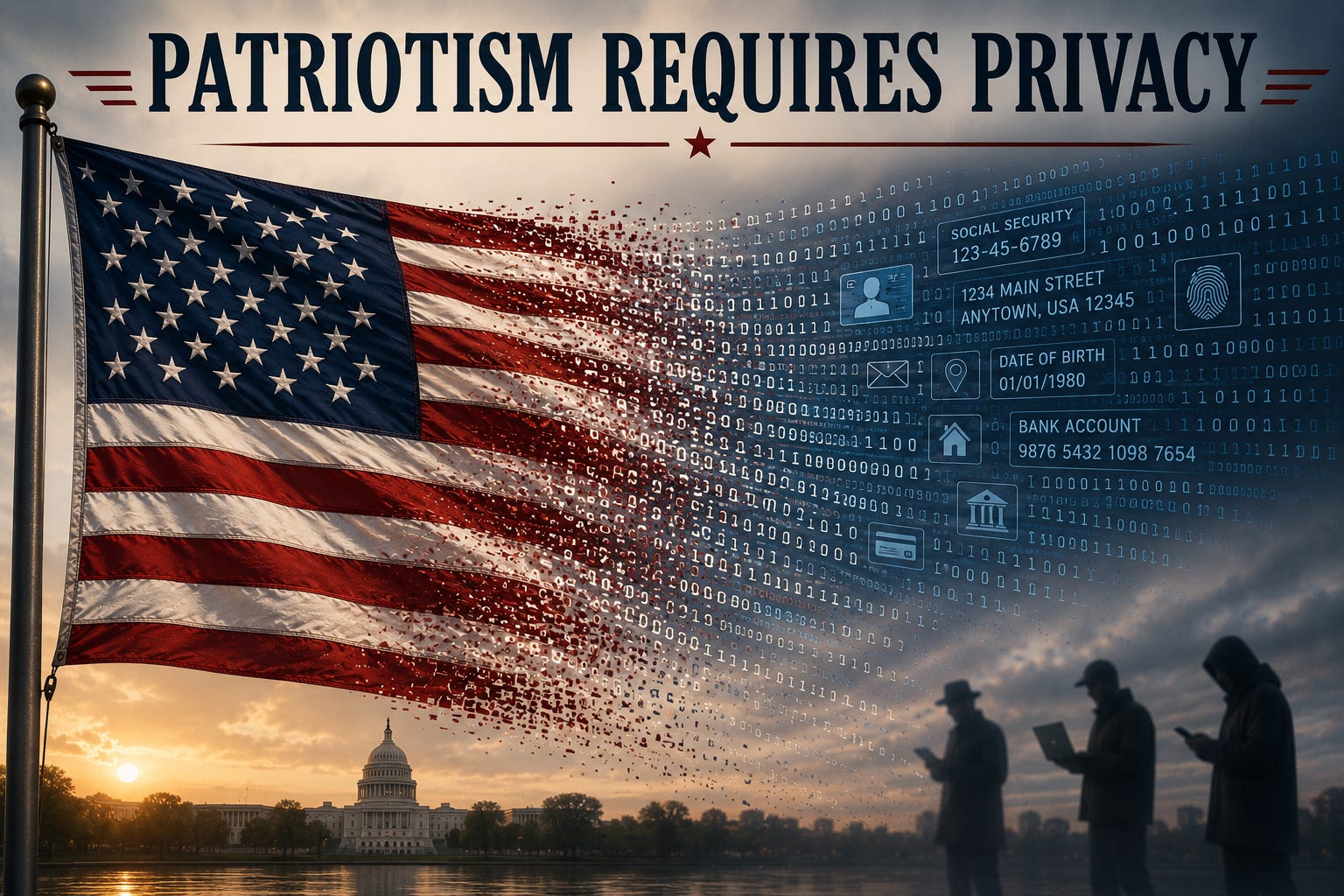
In December 2012, twenty children and six adults were murdered at Sandy Hook Elementary School. In that atmosphere of fear, grief, and urgency, New York’s Journal News published a map showing the names and addresses of registered gun owners in Westchester and Rockland Counties. 1 The newspaper believed it was acting as a responsible and patriotic member of the community. Instead of protecting the public, it became a lesson in unintended consequences.
Prison inmates used the map to identify where correctional officers lived. 2
Law enforcement officials' addresses were exposed. 3
Many believed burglars would use the map to target homes.
Thousands of others worried about their personal safety
Eventually, New York lawmakers demanded that the site be taken down, but the damage was done and many people were exposed.
Now imagine if there were laws doing the same kind of exposure, but giving it to enemy nations instead.
The BSA and Patriot Act
In 1970, many people in Congress were concerned that drug dealers were taking their dirty money and depositing it into banks. They came up with the Bank Secrecy Act so banks would have to collect information and implement KYC (Know Your Customer) laws to help fight money laundering. Objections to the bill over privacy violations were raised but quickly squashed on the altar of fighting crime and patriotism.4
America was attacked on September 11, 2001. Nearly 3,000 people were killed and the World Trade Center was destroyed. In the aftermath, Congress passed the Patriot Act, which expanded the BSA and required even more sharing of information. The law was intended to help law enforcement investigate terrorist organizations, but it also expanded the collection and distribution of financial information on millions of ordinary Americans. 5
Honey Pots
A honey pot is something valuable that has been concentrated in one location. The BSA requires customer information to be collected and stored. The Patriot Act requires that much of this information be shared with a wide variety of government agencies on demand. Searchable databases of customer information were created to fulfill the requirements of KYC laws and the Patriot Act.
Thus, honey pots were created that contain large amounts of static information about U.S. citizens. By static information, I mean data that is permanent or mostly permanent, including:
• Full legal name
• Social Security number
• Physical mailing address
• Date of birth
• Business information
These databases also frequently contain transaction history and behavioral patterns.
The federal government demanded a dossier of every American’s participation in the financial system by law.
What could go wrong?
The honey pots get hacked all the time! In 2026 alone, there have already been 27 major data breaches... and counting.6 To learn more about this, read my previous article.
But what if enemy nations stole this information? What could they do with it?
Social Engineering
Many people believe that hacking is complicated and requires sophisticated computer knowledge, and sometimes it does. But most of it is just good old-fashioned phishing and social engineering. Send an email claiming to be the boss and demanding a password. People fall for it all the time.
Think how much easier this is if you know a person’s name, address, date of birth, and business information. Also consider how much easier password guessing and account recovery become with all of this information. Just think about the common account recovery questions:
What is your mother’s maiden name?
What city were you born in?
What was the name of the first street you lived on?
This is all static information that's supposed to be private. But a few data breaches later, somebody else may know the answers too.
Cyber Warfare
In 2014, China hacked the OPM, a repository containing information on millions of federal government employees, including:
Their names
Their Social Security numbers
Family information
Home addresses
SF-86 forms, which contained a 120-page questionnaire detailing the personal history of anyone applying for a security clearance.
U.S. officials confirmed that China combined the OPM files with stolen health and travel records to identify American intelligence officers. 7 CIA networks were burned. Chinese counterintelligence taunted our officers with how much they knew. Joel Brenner, the former top counterintelligence chief for the Intelligence Community, called it "crown jewels material, a goldmine."8 Three years later, China came back for more. The 2017 Equifax breach exposed the Social Security numbers, birth dates, and addresses of roughly 147 million Americans. 9 The OPM files told China who our people were. Equifax told them who was in debt, who was struggling, and who could be bought.
China has the social engineering game in the bag, and this is just peacetime.
What happens if China invades Taiwan and we go to war?
The Chinese government has dossiers on federal workers.
They have dossiers on employees who work in critical infrastructure.
They have dossiers on members of the CIA and FBI.
They have dossiers on our political leaders.
And that is just espionage. Knowledge of these people makes it much easier to phish them and gain access to critical infrastructure.
China never needs to drop a bomb on the USA to kill millions of people. They just need to turn off the power in New York City for a few weeks. Or shut down our refineries. Or black out our hospitals. Infrastructure employees bank like everyone else. Their information has been leaked, and they are now easy targets for phishing and password attacks.
We are vulnerable. And we made ourselves vulnerable by centralizing our most important information and making it easier to hack by instituting the Bank Secrecy Act and the Patriot Act. Yes, hacks and cyber warfare will happen no matter what. The OPM data was breached without KYC information. But the Patriot Act makes hacking at scale easier and cheaper than it has to be. And if there's a war, time and money matter.
We didn’t have to do this. We chose to.
Final Word
The most patriotic thing we can do is change how we collect and store our data.
When in a hole, stop digging. — Denis Healey
Disclaimer:
The information in this publication is for educational purposes only and does not constitute financial, investment, or legal advice. Always do your own research before making any financial decisions. Cryptocurrency investments carry risk, and past performance is not indicative of future results. I actively invest and trade in the crypto markets, and my personal portfolio and holdings change frequently. Nothing I share should be interpreted as a guarantee of performance or a recommendation to buy or sell any asset.
https://www.snopes.com/fact-check/gun-map/
https://www.foxnews.com/us/inmates-using-newspapers-gun-owner-map-to-threaten-guards-sheriff-says
https://www.huffpost.com/entry/new-york-journal-news-gun-owners-westchester-rockland-counties_n_2362530
https://www.cato.org/policy-analysis/revising-bank-secrecy-act-protect-privacy-deter-criminals#1969-hearing
https://www.fincen.gov/resources/statutes-and-regulations/usa-patriot-act
https://www.pkware.com/blog/2026-data-breaches
https://www.pbs.org/newshour/show/china-russia
https://www.wearethemighty.com/articles/china-hack-opm/
https://www.fbi.gov/news/stories/chinese-hackers-charged-in-equifax-breach-021020